
A Theorist Finds His Field
American PrometheusThis thread traces how Oppenheimer’s early struggles with experimental work gave way to a distinctive, influential career in theoretical physics.
increasing Bearing strength in each event
 decreasing
Bearing strength in each eventdecreasingChemistry at Harvard

Chemistry at Harvard
A first choice
Robert entered Harvard intending to study chemistry and pursued an unusually heavy course load. His interests ranged widely across literature, mathematics, philosophy, and the sciences.
A change of direction
He recognized that the ideas he most loved in chemistry led toward physics. The choice was less a settled plan than a discovery of where his intellectual appetite truly lay.
The Experimental Mismatch
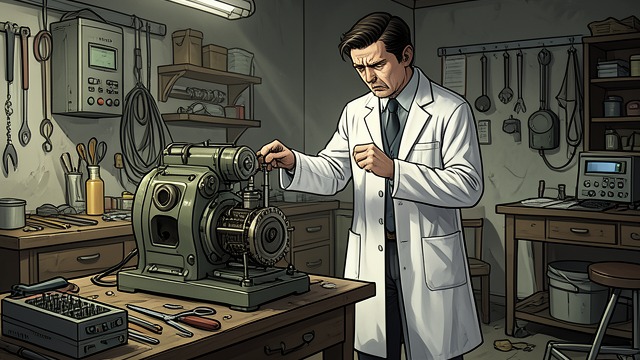
The Experimental Mismatch
A poor fit
At Cambridge, Oppenheimer struggled with delicate laboratory work and felt increasingly inadequate. His inability to manage equipment contrasted sharply with his analytical speed.
A turning point
The mismatch intensified his crisis, but also clarified his strengths. He turned toward theoretical problems, where new quantum physics offered a field suited to his imagination.
Göttingen’s Breakthrough
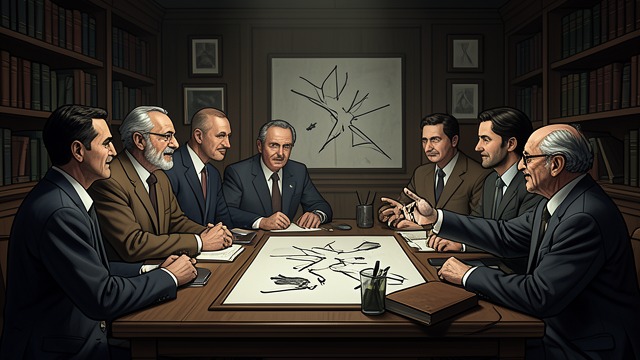
Göttingen’s Breakthrough
A community of theory
In Göttingen, Oppenheimer joined a lively community developing quantum mechanics. Discussions with Max Born and other young physicists taught him how conversation could deepen his understanding.
Early achievements
He published important papers, completed a doctorate, and contributed to the theory of molecules. His intellectual reputation grew rapidly, though his confidence could exceed his patience with detail.
The Berkeley School

The Berkeley School
A center takes shape
Oppenheimer made Berkeley a destination for theoretical physics, attracting students through demanding lectures and an energetic seminar culture. He shared credit and drew students into one another’s problems.
Influence beyond papers
His lasting strength was often synthesis rather than a single definitive discovery. Students learned to recognize promising questions and to imagine physics as a living, collaborative enterprise.
The Institute Years

The Institute Years
Rebuilding intellectual life
As director of the Institute for Advanced Study, Oppenheimer gathered physicists and humanists into a shared intellectual setting. He hoped to make the Institute more than a haven for isolated scholars.
A changing role
His energy increasingly went to administration and public affairs rather than original research. Though he continued to shape scientific discussions, his own published physics work dwindled.
1922–1923, during his first year at Harvard
Autumn 1925, at the Cavendish Laboratory
1926–1927, at Göttingen University
1929–1938, at the University of California, Berkeley
1947–1950, in Princeton
